|
This blog post is about a simple noun, ‘joy', and its related adjective form ‘joyful’ — two words commonly used in Hong Kong to describe public events and activities in a very positive way. Here are some examples: 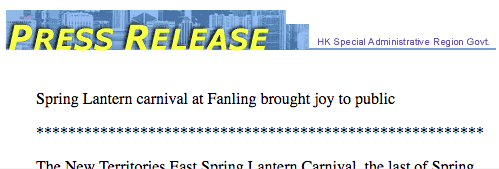 "With programmes specifically for learning Putonghua together with songs in Putonghua, this channel can help Hong Kong audience to learn Putonghua in an easy way and experience the joy of speaking Putonghua in everyday life." 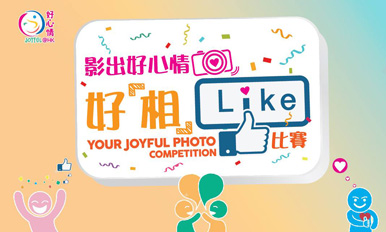 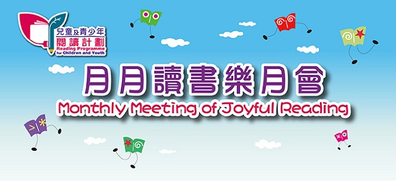 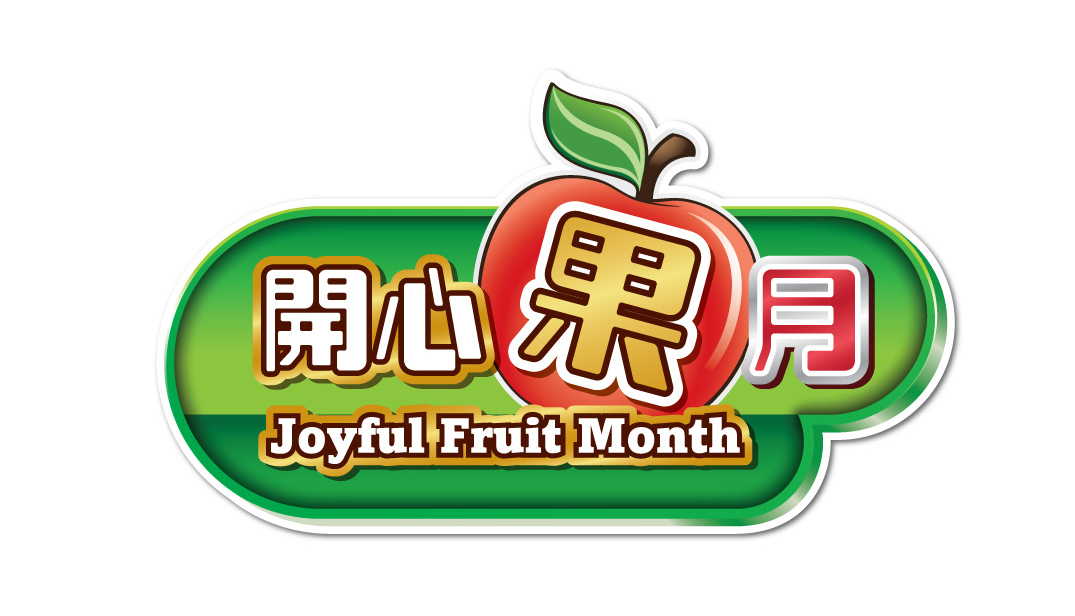 Native English speakers find all these Hong Kong examples rather strange. The reason is that, in standard English, ‘joy’ and ‘joyful’ have quite specific meanings connected with intense personal happiness. In other words, in standard English ‘joy’ and ‘joyful’ tend to be reserved for quite specific events or activities that cause a powerful positive emotional response. Let’s start with the word ‘joy’. In standard English, it is almost always reserved for use in connection with an individual's emotional response to something. As a strong emotion, ‘joy' is most commonly associated with meaningful personal events (e.g. weddings, births, prizes and other triumphs).
‘Joy' is also frequently used to refer to a strong personal emotion that is triggered by beautiful things or activities:
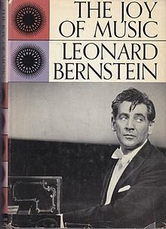
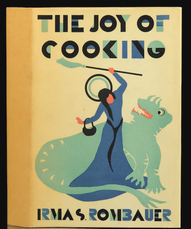
Sometimes you will find this particular sense of ‘joy’ expressed in the phrase ‘the joy of X’:
In all these uses, ‘joy’ carries a sense of a very strong personal emotion of happiness and personal satisfaction arising from the activity. The titles also perhaps suggest that if you read these books, you can learn how to experience ‘joy’ when you are engaging in these activities. We use ‘the joy of X’ to capture a sense of how deeply fulfilling and emotionally satisfying an activity is or can be. Given our discussion so far, it is important to realise that standard English speakers do NOT use ‘joy’ to refer to mundane, ordinary or everyday things or activities. You are unlikely to see expressions like ‘the joy of cleaning’ or ‘the joy of commuting’ or ‘the joy of sleeping’ or ’the joy of spoons', because none of these activities or things normally generate strong personal emotions of happiness and satisfaction in people. This is why the expression ‘the joy of speaking Putonghua in everyday life” in our example earlier sounds very odd. Everyday communication through language is something we do automatically, all the time, and I don’t know anyone who thinks that just talking generates an intense emotion of personal happiness. In the same way, public carnivals and festivals may deliver fun or pleasure to people who go along to them, but seldom the intense personal emotion of joy. This is why the headline ‘Spring Carnival at Fanling brought joy to the public' is also incorrect, an example of Hong Kong English. Carnivals, festivals, parties, concerts, performances, ceremonies may all be pleasurable occasions, but in English they are unlikely to be described as occasions that generate ‘joy’ in the people who attend. ‘Joy’ is too strong and personal a word for these contexts. This brings us on to the adjective form ‘joyful’. The word is built from ‘joy’ + ‘full’, i.e. full of joy. Apart from talking about how we feel (“I feel joyful today”), it is commonly used to describe things that express and/or cause a feeling of joy in us:
Once again, in English we can’t use ‘joyful’ in front of any old noun. The adjective can only be used to qualify nouns that refer to objects or occasions that express joy (e.g. joyful smiles, joyful laughter, joyful scenes, a joyful occasion) or that cause joy (e.g. joyful music, joyful celebrations). ‘Joyful Fruit Month’, on the other hand, just doesn’t make any sense. In fact, it’s not even clear what is supposed to be ‘joyful’ — the fruit or the month? Similarly, most English readers will have no idea what a ‘joyful photo’ is. Neither ‘photo’ nor ‘fruit’ are the kinds of noun that can occur with ‘joyful’ as an adjective, because these items cannot feel joy themselves, and neither can they express or cause a feeling of joy in people. And although it is possible to talk about ‘the joy of reading’, the expression ‘joyful reading’ doesn’t work in standard English. Generally when we are actually reading we do not feel joyful, so ‘joyful reading’ is inaccurate. In summary then, reserve your use of ‘joy’ and ‘joyful’ for contexts that refer to a high level of personal happiness. Don’t use them to describe public events like fairs and festivals, and don’t associate them with nouns like ‘fruit’ than cannot cause or express joy in any way.
0 Comments
Your comment will be posted after it is approved.
Leave a Reply. |

About this blogThis blog arises from keeping an eye on English in Hong Kong. I often use signs, notices and advertisements that I see as starting points to write about English issues that commonly challenge Hong Kong writers. Archives
October 2017
Categories
All
|

 RSS Feed